
Fermented non-alcoholic drinks

Kombucha and kefir.

We develop the culture, base and flavour profile around the target product. Sweetness, acidity and carbonation are set deliberately, as is the process for a raw, chilled or stabilised drink.

Kombucha · Kefir
Solid-state fermentation

Tempeh, for example.

Substrate, culture, incubation and binding decide whether the tempeh can be sliced, breaded or processed further. We develop the product deliberately for the next processing step.

Tempeh

Fermented vegetables

Kimchi, kraut and other vegetable ferments.

Salt, acidity, heat, texture and ripening are tuned to the intended product profile. The result is a vegetable ferment that tastes as intended and can be produced and filled reliably.

Kimchi · Kraut · other vegetable ferments

Sample to series

Scale is part of the recipe.

A formulation that convinces in a small batch behaves differently at production volume. Temperature control, fermentation time and handling all move the result. So we develop with the target scale in view from the start, and test the transfer before a specification is written.

  • Measured, fixed values
  • Repeatable across many batches
  • A specification that holds on the line
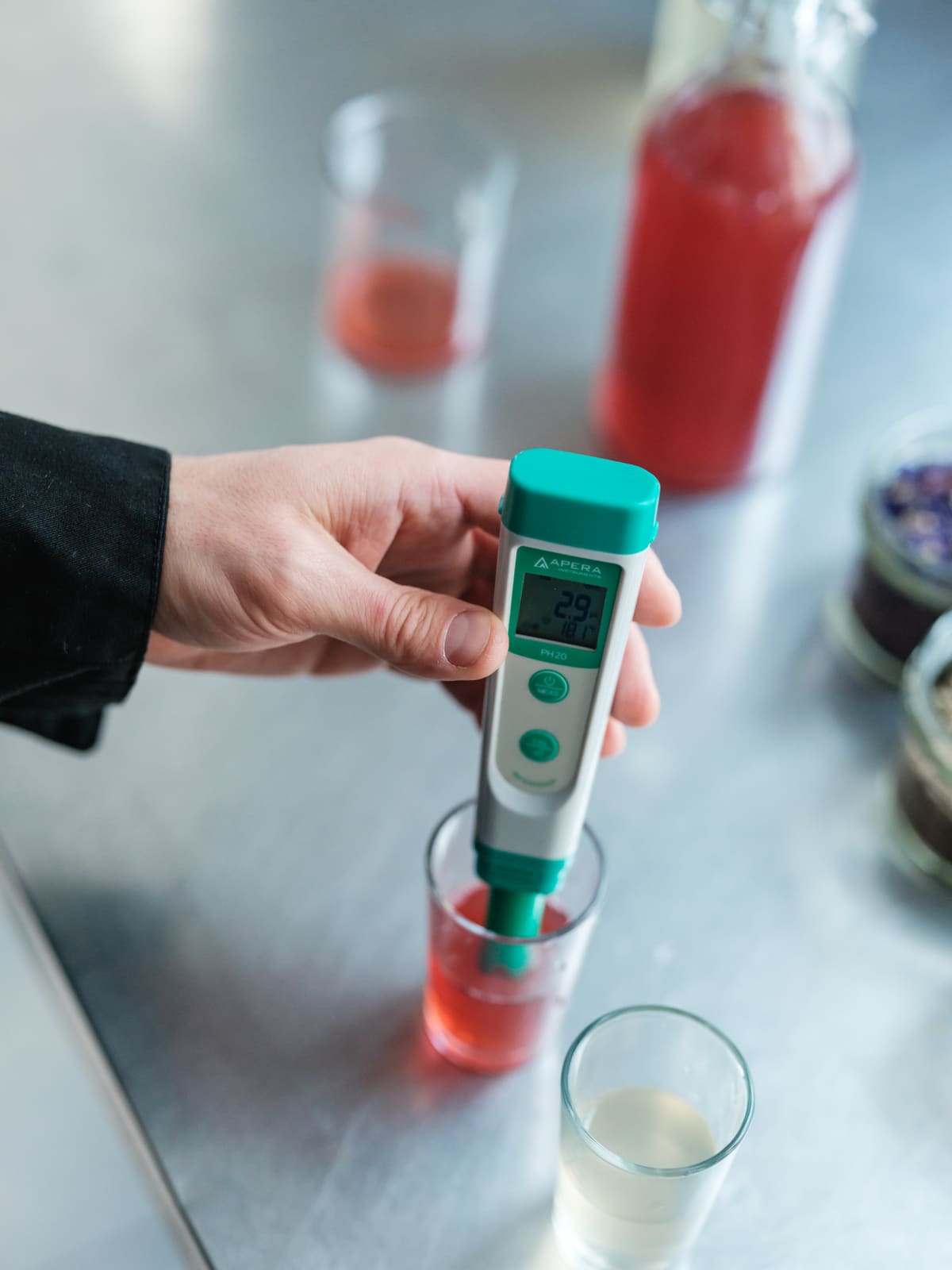
Measuring the pH of a kombucha sample in a glass.

Review the product idea together

Process, quality, packaging and volumes need to work together. We clarify possibilities and open questions early. For retail and industry alike, we produce the finished product and deliver it to you.